How to make matcha at home (with a bamboo whisk)
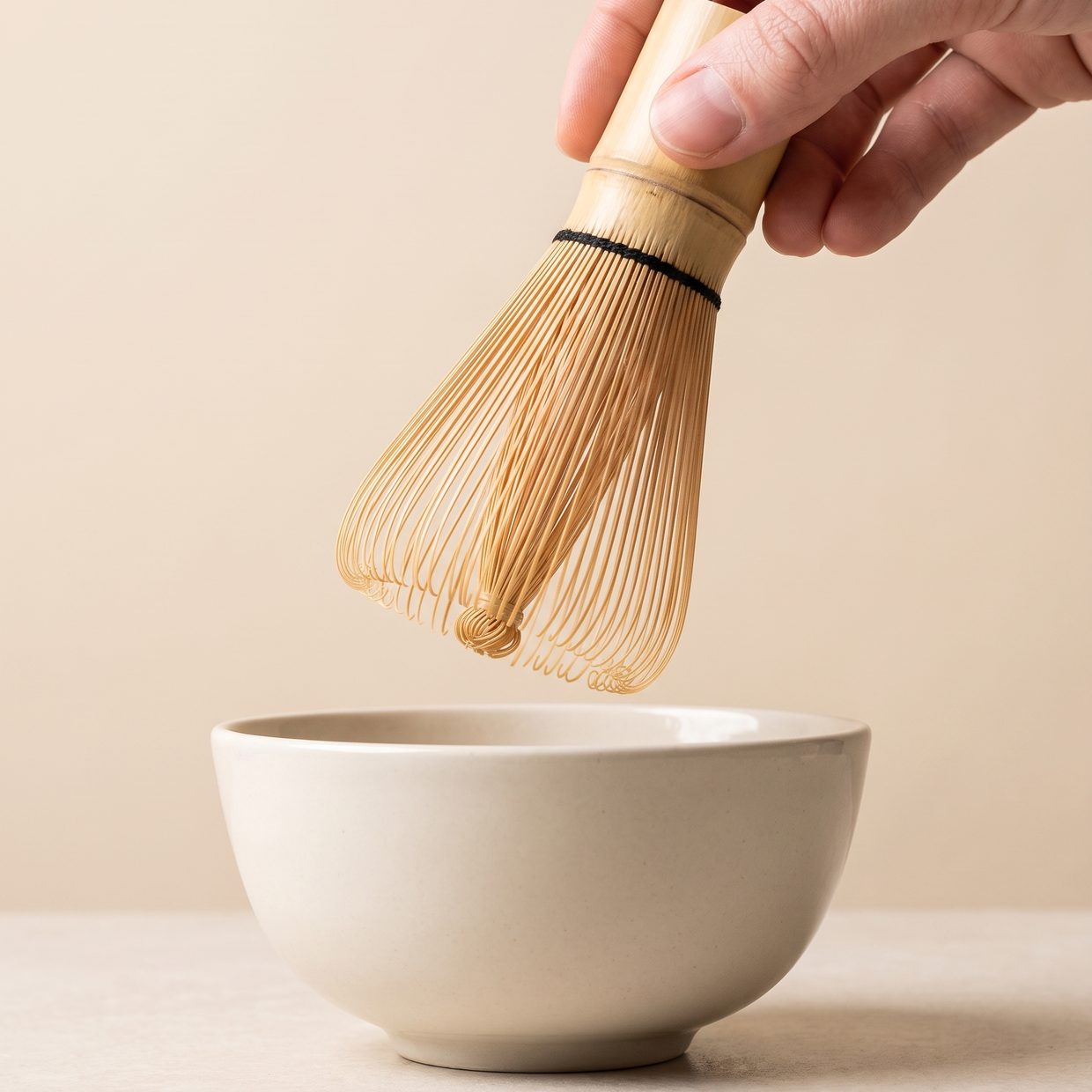
Making a bowl of matcha takes about a minute once you have done it twice. This guide covers the thin, everyday style (usucha) that most people at home drink, plus a latte variation, thicker matcha, and the fixes for the things that go wrong the first week. It assumes a bamboo whisk. If you are wondering whether you can use the milk frother you already own, read bamboo whisk vs electric frother first.
What you need
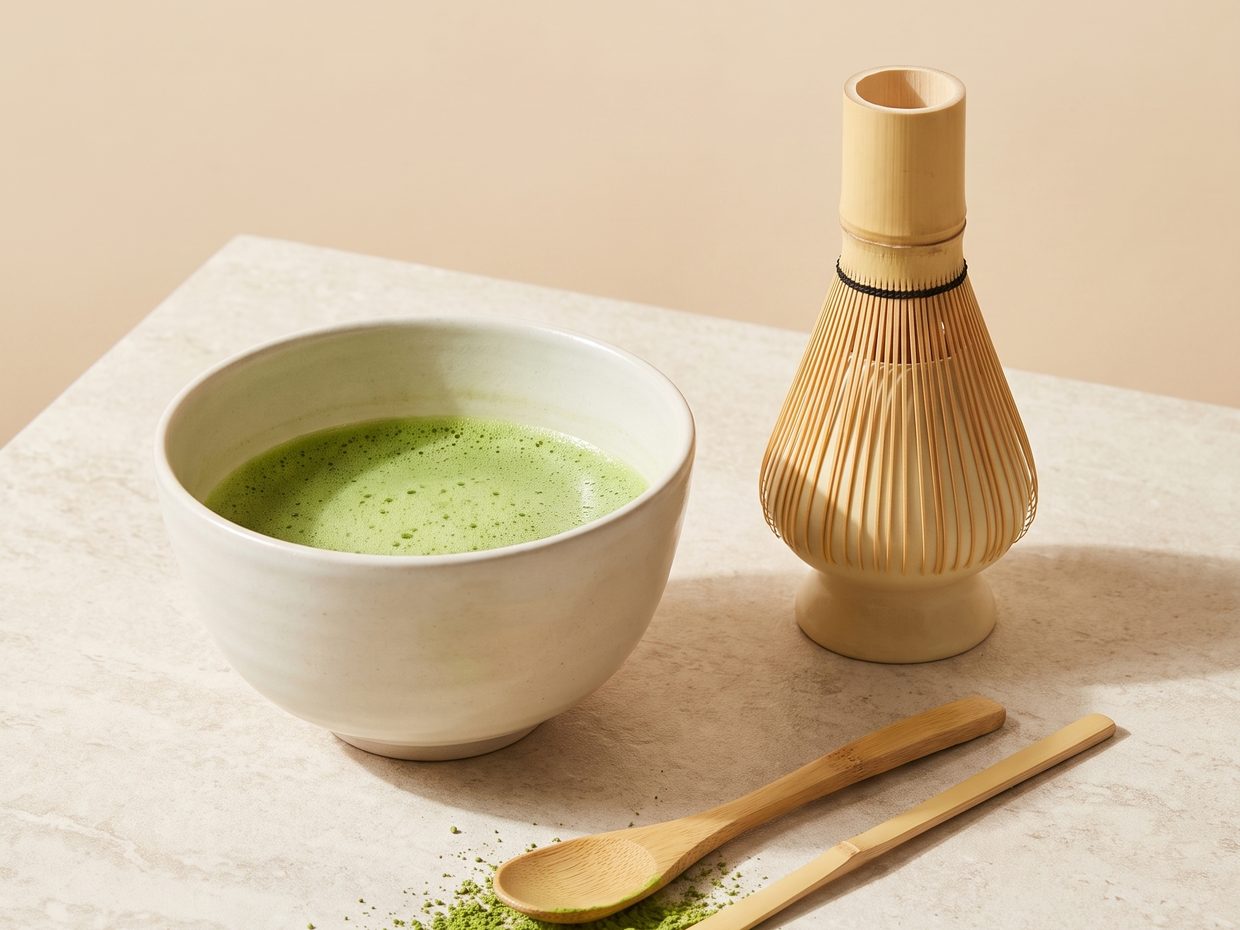
- Matcha – any you like. We do not sell it.
- A bamboo whisk (chasen) – 64 to 120 prongs; 100 prongs is the everyday standard and the one to start with.
- A wide bowl – ideally 11-13 cm across with a rounded base. A matcha bowl is best; a wide cereal bowl works to start.
- A scoop or a teaspoon, and ideally a small kitchen sieve. Bamboo scoops, whisk holders and storage tins are the small extras that make it easier.
- Water just off the boil – 70-80 °C.
- For lattes: a tall glass or cup and milk of your choice.
Everything except the matcha is in the 4-Piece Speckled Matcha Set, which has the bowl, whisk, holder and scoop for £29.99.
Step by step
- Warm the bowl and soften the whisk. Pour hot water into the bowl, stand the whisk in it for a minute. This warms the bowl and opens the prongs so they are flexible and less likely to snap. Tip the water out and wipe the bowl dry.
- Sift the matcha. One big heaped bamboo scoop (about 1.5-2 g, or a level teaspoon) through a sieve into the bowl. Sifting removes clumps – the main cause of lumpy matcha.
- Add water. About 60-80 ml at 70-80 °C. If your kettle has no temperature setting, boil, then wait about two minutes, or pour into a jug first. Boiling water makes matcha taste harsh and bitter.
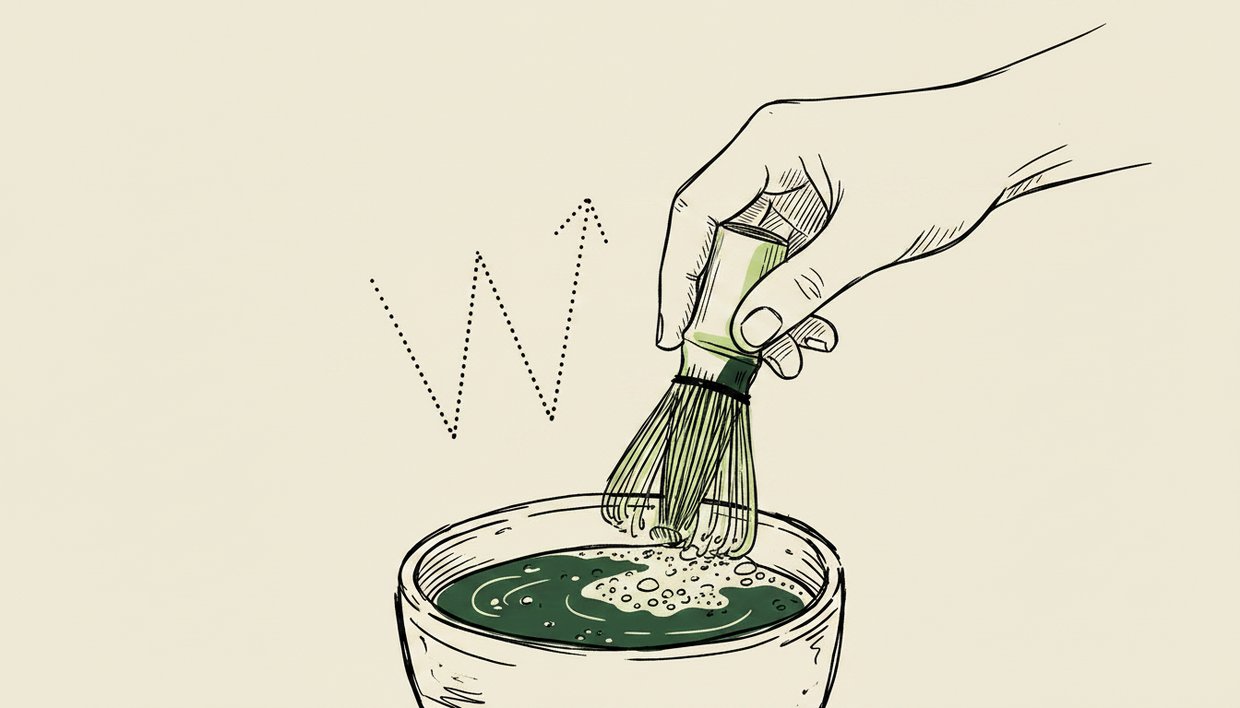
- Whisk. Hold the whisk lightly, like a pen. Move it briskly back and forth in a W or M shape from the wrist (not round and round), keeping the prongs just above the bottom of the bowl. Fifteen to thirty seconds. You are looking for a layer of small, even bubbles.
- Finish. Slow down, skim the whisk gently across the surface in one small circle to pop the large bubbles, and lift out from the centre.
- Drink straight from the bowl, in two hands, while it is warm.
The two mistakes everyone makes first
- Water too hot. Bitter, flat-tasting matcha is almost always a temperature problem, not a matcha problem.
- Stirring instead of whisking. Round-and-round motions never build foam. Fast, short, zig-zag from the wrist does.
Matcha latte at home (hot or iced)
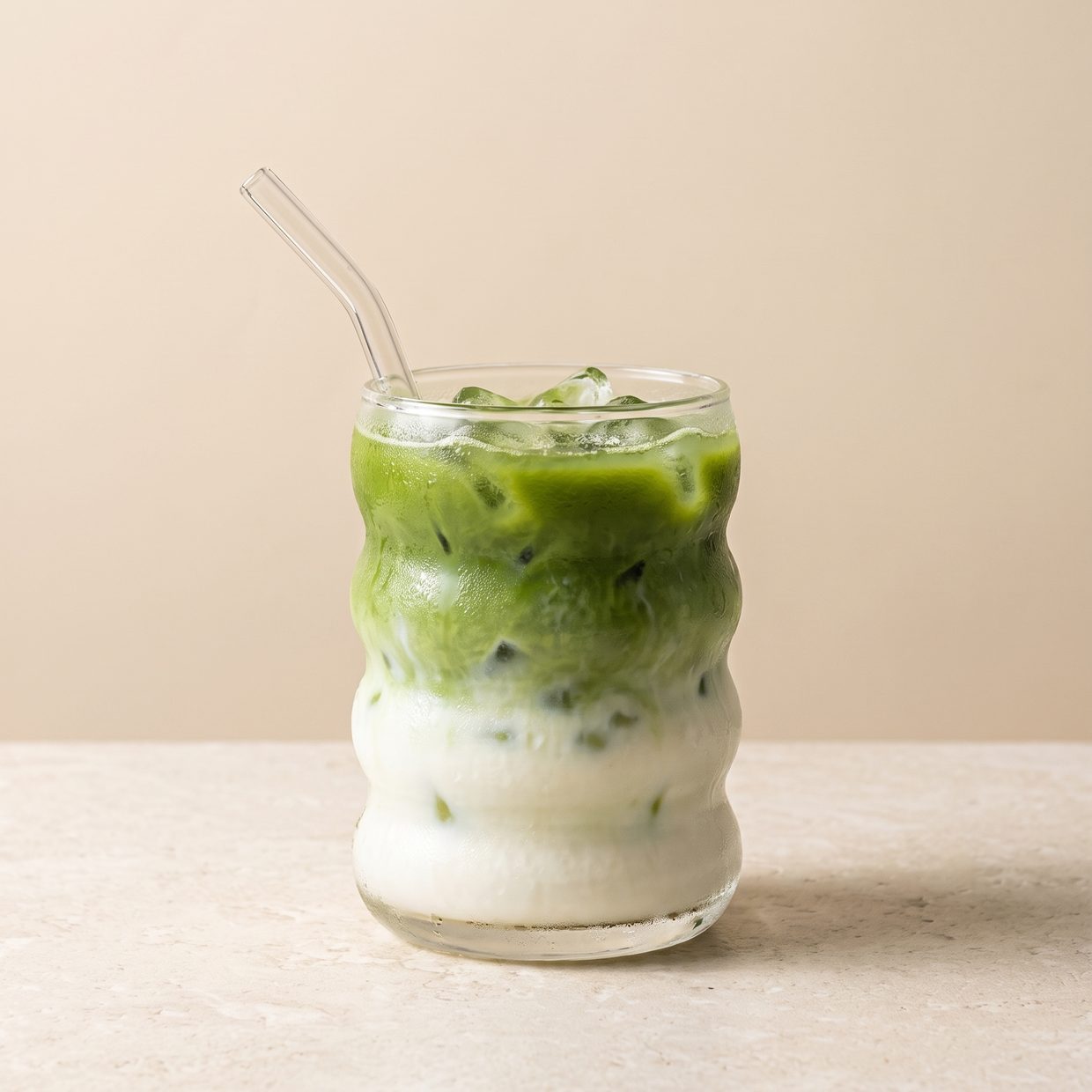
- Sift one big heaped scoop (about 2 g) into the bowl. Add just 30 ml hot water and whisk to a smooth, paste-like foam.
- Pour into a glass or mug; top with 150-200 ml warmed (or cold, over ice) milk of your choice.
Do not whisk the bamboo whisk directly in milk – the fat coats the bamboo, is hard to rinse out, and shortens the whisk's life. Whisk in water first, add milk after. If you own a milk frother, this is the one place it genuinely helps: frother for the milk, bamboo whisk for the matcha.
Thicker matcha (koicha-style)
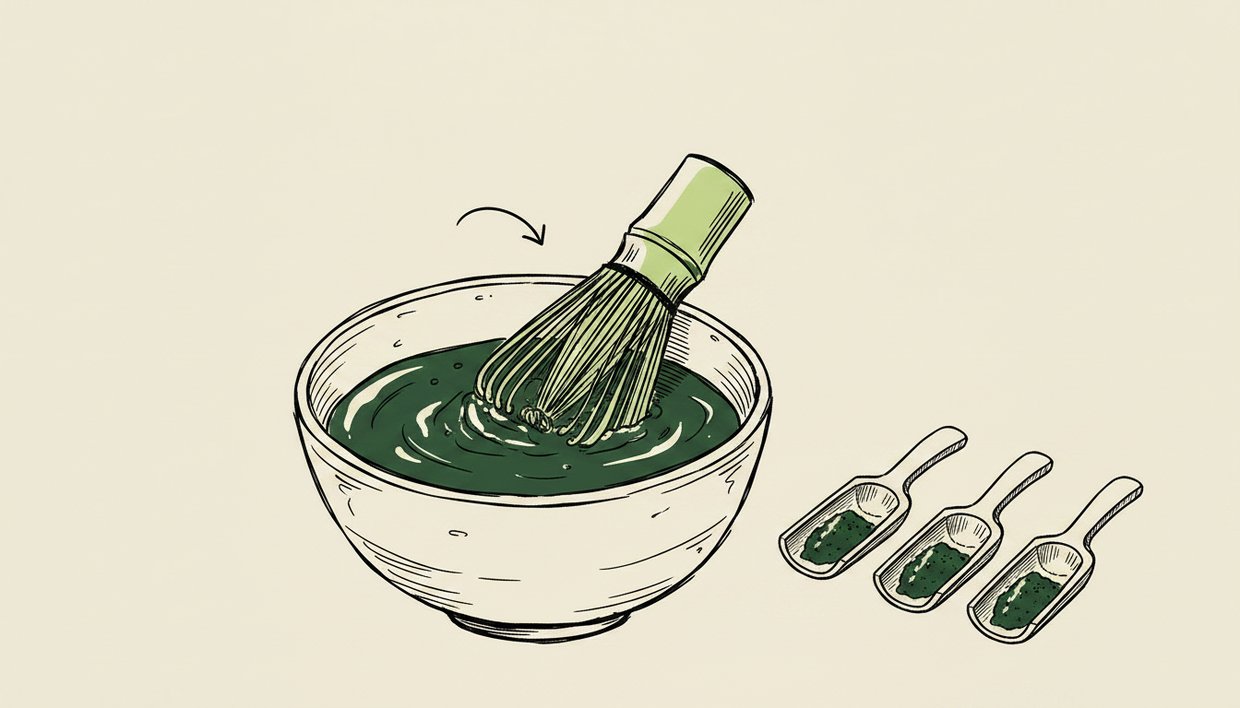
About 4 g, or two big heaped scoops, to 30-40 ml of water. Rather than whisking, knead slowly with the whisk to a glossy, paint-like consistency. A lower prong count – 64 prongs or the long-handled 32 – is sturdier for this than the 100.
Troubleshooting
| Problem | Likely cause | Fix |
|---|---|---|
| Lumps | Not sifted / matcha clumped in the tin | Sift; whisk a small amount of water into a paste first |
| No foam | Stirring not whisking; too much water; whisk not soaked | W motion from the wrist; use 60-70 ml; soak whisk first |
| Bitter | Water too hot | 70-80 °C |
| Big loose bubbles | Whisking too slowly / stopping too soon | Whisk faster and finish with a slow surface skim |
| Whisk prongs bending | Pressing on the bowl base; narrow mug | Keep prongs just off the base; use a wider bowl |
| Whisk smells or spots | Stored damp | Rinse, shake, dry upright, then keep on a holder – see whisk care |
Choosing your tools
Prong count. More prongs (100-120) give finer, denser foam; fewer (48-80) are sturdier and better for thick matcha. For a first whisk we say 100. Full comparison: how many prongs should a matcha whisk have?
Bowl. Width matters more than anything: 11-13 cm across, rounded inside, so the whisk can move in a W without hitting the sides. Our ceramic and stoneware bowls are shaped for exactly that.
Holder. A whisk holder keeps a dry whisk's prongs in shape between bowls. It is the accessory people skip and then wish they had not.
Scoop and tin. A bamboo scoop holds about 1 g as a light scoop and about 2 g as a big heaped one; a storage tin keeps opened matcha away from light and air. Both are in accessories.
Sets. If you would rather not choose, the starter sets put a bowl, whisk, holder and scoop in one box. The two-piece sets are a bowl and holder only.
Looking after the whisk
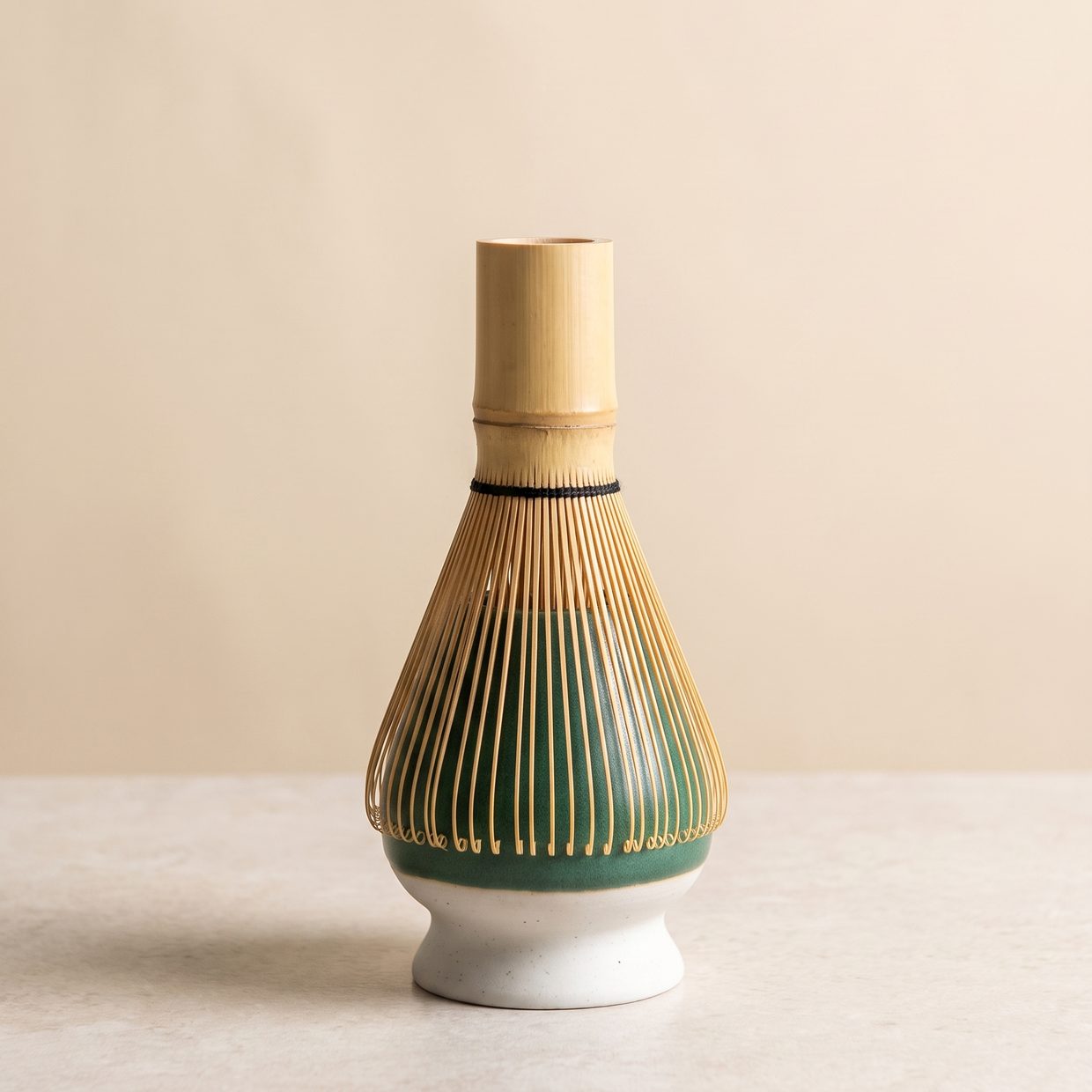
Rinse under warm water (no soap), shake, and stand it upright, prongs up, to dry in open air. Once it is dry, keep it on a holder. Never leave it in the bowl or a drawer wet. Expect a whisk to last about 2-3 months of daily use before the prongs start to snap; that is normal, not a fault. Full guide: caring for your bamboo whisk.
Frequently asked questions
What water temperature should I use for matcha?
70-80 °C. Boiling water scalds the powder and makes it bitter and flat. If your kettle has no temperature setting, boil it, then wait about two minutes before pouring, or decant into a cold jug first.
How much matcha powder per bowl?
About 1.5-2 g – one big heaped bamboo scoop or a level teaspoon – to 60-80 ml of water for a thin, everyday bowl. Use the same amount with just 30 ml of water as the base for a latte.
Why is my matcha bitter?
Almost always the water was too hot. Drop to 70-80 °C before blaming the powder. Too much matcha for the water, or an old, opened tin stored in the light, are the other two causes.
Why won't my matcha foam?
Three usual reasons: stirring in circles instead of a fast W from the wrist; too much water (stay around 60-70 ml); or a dry, unsoaked whisk. Fix those and foam appears in 15-30 seconds.
Can I make matcha without a bamboo whisk?
You can dissolve it – a jar with a lid, a shaker, or a small kitchen whisk all work – but you will not get the fine, lasting foam. A 100-prong bamboo whisk is the cheapest thing that actually changes the result.
Do I need a special bowl for matcha?
Not strictly, but a wide, round-based bowl (11-13 cm) makes whisking much easier and stops the prongs bending against narrow sides. A wide cereal bowl works to start; a matcha bowl is the upgrade most people make first.
How do I clean a bamboo whisk?
Rinse it under warm water straight after use, no soap, shake off the water and let it dry standing upright, prongs up, before it goes on a holder. Never soak it for hours or put it in the dishwasher. Details on the whisk care page.
How long does a bamboo whisk last?
Roughly 2-3 months of daily use, or about six months at two or three bowls a week. Prongs snapping after that is normal wear, not a fault; keep a spare whisk so you are never without one.
Get the 4-Piece Speckled Matcha Set – £29.99 100-prong bamboo whisk – £8.99
Guides by topic
Choosing your tools
-
 Does Matcha Bowl Colour Matter? Pink, Black and White Bowls
-
 Matcha Bowl and Whisk Sets: What Is Inside the Box
-
 What Cup Should You Drink Matcha From?
-
 How Long Does a Matcha Whisk Last? And When to Replace It
-
 Do You Need a Matcha Whisk Holder?
-
 What's in a Matcha Starter Set – and What You Actually Need
-
 What Size Should a Matcha Bowl Be? (And Can You Use a Normal Bowl?)
-
 80 vs 100 Prongs: How Many Prongs Should a Matcha Whisk Have?


Care & troubleshooting


Comparisons


How-to
-
 Matcha Water Temperature: 70-80 °C and How to Hit It
-
 How to Clean a Matcha Bowl (and Get the Green Stains Out)
-
 How Long Should You Soak a Matcha Whisk?
-
 1 Teaspoon of Matcha in Grams: The Conversion, Both Ways
-
 How to Store and Dry a Matcha Whisk
-
 How Much Matcha Per Cup? Grams, Spoons and Water Ratios
-
 Iced Matcha in a Glass: Tools That Make It Easier
-
 How to Store Matcha at Home (Tin, Fridge, Light)
-
 How Many Grams in a Matcha Scoop? A Chashaku Guide
-
 How to Use a Bamboo Whisk for the First Time (Soak, Open, Whisk)
-
 Can You Make Matcha Without a Whisk? (What Works and What Doesn't)
-
 How to Make a Matcha Latte at Home (Hot and Iced)


